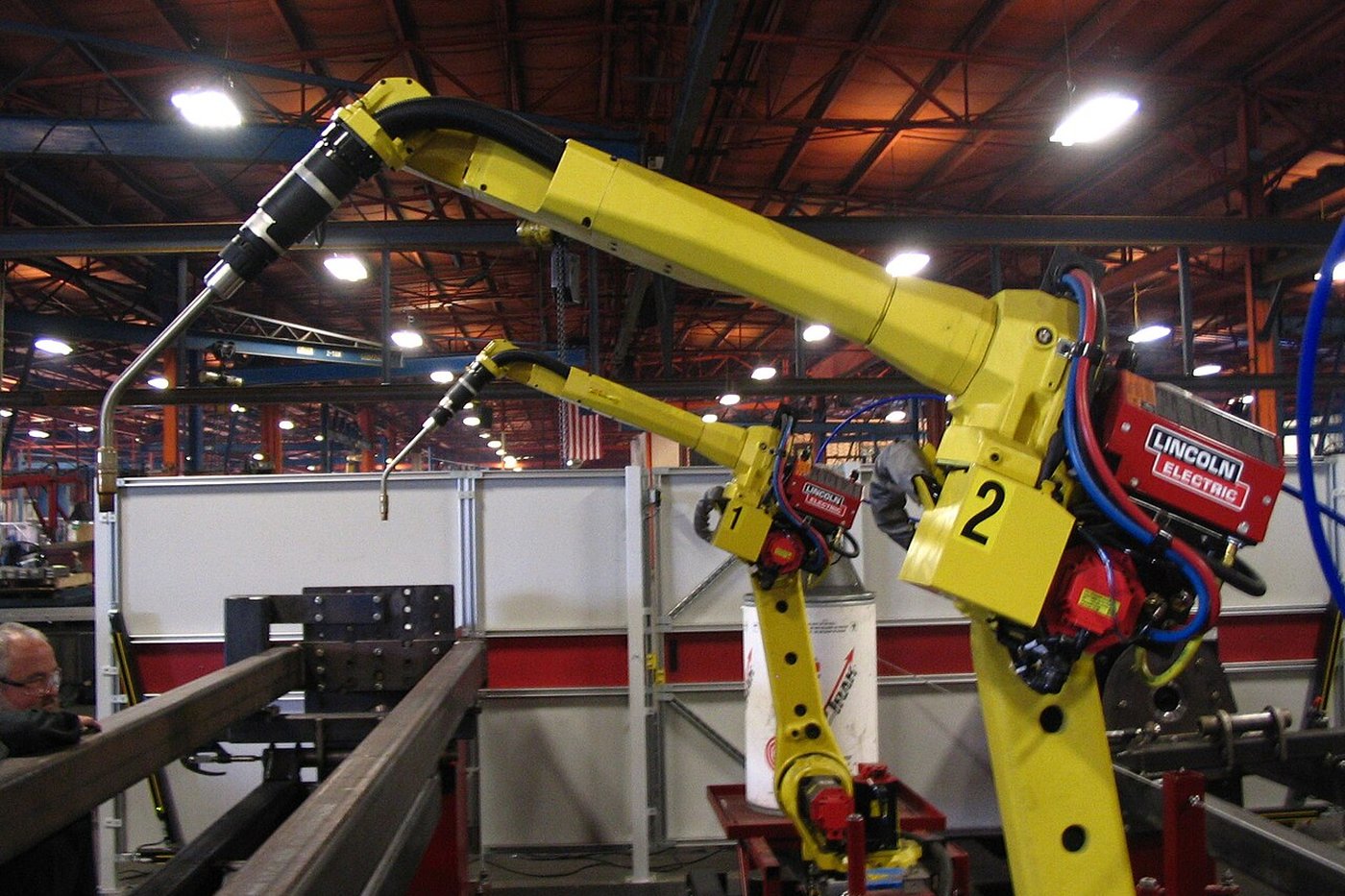
Corresponds to: factory-line control and industrial production
Framework · Modern languages programmes for the vocational pathway / CAP (Bulletin officiel special No. 5 of 11 April 2019 · arrêté 3-4-2019).
CECRL targets · CAP A2 · Bac Pro LVA B1+ · LVB A2+. Competences · listening / reading comprehension · spoken interaction & production · writing in everyday and workplace situations. Language aims are common; the trade supplies authentic CFA documents and interlocutors. Teaching unit = Class (not “session”).
Language aims (pathway)
- Read workplace instructions and pass them on accurately (BO LV · CAP A2 / Bac Pro LVA B1+).
- Interact with a client or mentor: ask, clarify, explain without inventing.
- Present the trade / a task / a mobility wish in a short oral and parallel writing.
- Use trade English in context for factory line · phrases, not isolated word lists.
- Co-teach language and trade gestures on the floor when possible.
Vocabulary in context
line
pace
adjustment
alarm
stop
quality
start-up
shift
| Term | Phrase in context |
|---|
| pace | “Pace never justifies an unsafe move.” |
| adjustment | “I apply the setpoint and log any deviation.” |
| alarm | “Alarm: read, secure · do not silence it.” |
| safe stop | “Safe stop to procedure, then inform the team.” |
| non-conformance | “Quality non-conformance: hold the batch and report.” |
| start-up checklist | “Full start-up checklist before the cycle.” |
| shift handover | “Shift handover: five clear facts, no hidden issues.” |
| indicator | “I read the indicator before I raise the pace.” |
| hold | “I hold the lot instead of pushing it through.” |
| instruction sheet | “The station instruction sheet is posted and dated.” |
Worked tables · what I can / what I must not do
How it works · read each row as a real situation. Column 1 = what you (line-operator apprentice) may do. Column 2 = what you must not do. Column 3 = What the qualified line operator does (the qualified adult / mentor). Then the I know / I don’t know tables: if you don’t know · you ask. These tables are also your written record to copy into the notebook.
Madame Carole Paoli Pompougnac · CFA Production
Table A · On the factory line
| I can… | I must not… | What the qualified line operator does |
|---|
| Watch my zone and report an alarm / abnormal noise | Bypass an emergency stop or guard | Decides safe stop / restart |
| Follow the production sheet and displayed pace | Change a critical setting alone | Authorises and validates settings |
| Wear line PPE and respect barriers | Enter a moving zone | Manages access and line lock-out |
| Say “I’m not sure about the setting” · I ask | Hide a quality fault to keep pace | Decides quality vs output and commits next steps |
| Fill the shift sheet without inventing | Falsify a quantity or check | Validates and archives traceability |
Table B · In the control room / training bay
| I can… | I must not… | What the qualified line operator does |
|---|
| Follow the simulator / bay scenario step by step | Skip a check “because it’s only training” | Supervises and corrects |
| State my level: “I can start up; for adjustment I need a check” | Boast “I handled everything” without proof | Sets my autonomy |
| Note alarms and actions on the training sheet | Clear an alarm without understanding it | Interprets and archives |
| Reset the station at the end of class | Leave a bypass mode active | Checks before release |
Table C · I know / I don’t know · On the factory line
| Situation | I know | I don’t know · I ask |
|---|
| Line alarm | I know I alert and don’t force | Code unknown · I ask |
| Pace setting | I know I don’t touch it alone | Instruction unclear · I ask |
| Quality fault | I know I report without hiding | Criterion unknown · I ask |
Table C · I know / I don’t know · In the control room / training bay
| Situation | I know | I don’t know · I ask |
|---|
| Simulator start-up | I know the checklist | Step unclear · I ask |
| Bypass mode | I know it’s forbidden in training without an order | State doubtful · I ask |
Learning Journey · Read and pass on a safety / quality instruction (factory line)
Programme focus (BO LV) · Read & pass on workplace instructions / safety (BO LV · professional situations) · 5 weeks · 5 × 55 min classes
Focus question · How do you read a workplace instruction in factory line and pass it on without losing a critical step?
Support · Workplace instruction sheet
Support type · Authentic-style trade document (invented, realistic)
LINE STATION · INSTRUCTION
1. Start-up checklist.
2. Watch indicators / alarms.
3. Adjustments to the sheet.
4. Fault: secure · inform · log.
5. Written shift handover.
FORBIDDEN: silencing an unread alarm · trading safety for pace.
Guided questions (Socratic reading) ·
- Who is the instruction for? What must be done first?
- Which verbs are actions, and which are prohibitions?
- What would go wrong if one step were skipped? Explain in simple English.
Class input ·
In vocational English (BO special No. 5 / 11-04-2019), learners work on everyday and workplace situations. At CAP level the target is roughly CECRL A2; Bac Pro LVA aims toward B1+. This learning journey trains reading for action: spotting steps, bans, and conditions in a factory line document, then passing the information on orally and in a short written note. Core idea · accuracy before speed; if you are unsure, you ask.
Class 1 · Read the instruction: steps and bans (55 min)
BO / CECRL aim · Reading comprehension (BO LV) · CECRL written reception
Language aims · Scan for who / what / order / forbidden actions.
Timing
- 0 · 5Warm-up: one safety word you already know on the floor.
- 5 · 20Silent reading of the sheet; underline action verbs and bans.
- 20 · 35Pairs: reorder the steps on cards.
- 35 · 48Class check: build the chain on the board.
- 48 · 55Exit ticket: 3 sentences “I must… / I must never…”.
Core activity · Guided reading for action (BO LV reception).
Worked example · On the board: the trade sheet (production sheet / stop instruction). Alex underlines “must / must never” and writes on a card: “In the factory line, I must check pace before start-up.” A partner mis-orders the steps; the class rebuilds the chain and keeps: “I must never skip adjustment.”
Worked table · read columns I can · I must not · What the qualified worker does. If you don’t know · you ask.
Table A · On the factory line
| I can… | I must not… | What the qualified line operator does |
|---|
| Watch my zone and report an alarm / abnormal noise | Bypass an emergency stop or guard | Decides safe stop / restart |
| Follow the production sheet and displayed pace | Change a critical setting alone | Authorises and validates settings |
| Wear line PPE and respect barriers | Enter a moving zone | Manages access and line lock-out |
| Say “I’m not sure about the setting” · I ask | Hide a quality fault to keep pace | Decides quality vs output and commits next steps |
| Fill the shift sheet without inventing | Falsify a quantity or check | Validates and archives traceability |
Keep this written record ·
Exit-ticket frame · I must… / I must never…
6-step chain (copy) · linked to production sheet / stop instruction.
Keep these words · pace · adjustment · start-up.
Copy the blank table · your own example from placement / CFA
Table A · On the factory line
| I can… | I must not… | What the qualified line operator does |
|---|
| … | … | … |
| … | … | … |
| … | … | … |
| … | … | … |
| … | … | … |
Materials · Trade sheet + step cards
At home · after class 1 · Copy the 6-step chain. Circle 5 words to keep.
Class 2 · Pass it on orally to a classmate (55 min)
BO / CECRL aim · Spoken production (BO LV) · CECRL oral production
Language aims · Explain the procedure in your own words (90 sec).
Timing
- 0 · 5Recall the chain from Class 1.
- 5 · 18Prepare a 90-second explanation (beginner listener).
- 18 · 40Performances: A explains, B plays the new apprentice.
- 40 · 50Feedback: missing step? unclear word?
- 50 · 55Self-check on 3 criteria (order, words, volume).
Core activity · Spoken production / interaction (BO LV).
Worked example · 90-second performance: Sam explains to a “new apprentice”: “First start-up. Then “I apply the setpoint and log any deviation.” After that, tell the line-operation mentor.” Feedback: one missing step on alarm. Sam redoes the middle section without rushing.
Worked table · read columns I can · I must not · What the qualified worker does. If you don’t know · you ask.
Table B · In the control room / training bay
| I can… | I must not… | What the qualified line operator does |
|---|
| Follow the simulator / bay scenario step by step | Skip a check “because it’s only training” | Supervises and corrects |
| State my level: “I can start up; for adjustment I need a check” | Boast “I handled everything” without proof | Sets my autonomy |
| Note alarms and actions on the training sheet | Clear an alarm without understanding it | Interprets and archives |
| Reset the station at the end of class | Leave a bypass mode active | Checks before release |
Keep this written record ·
Oral plan (90 s) · Beginner listener · Order · Key words (adjustment) · Volume.
Model openers · “First…” “Then…” “After that…” “Finally…”
Self-check · order · words · volume.
Copy the blank table · your own example from placement / CFA
Table B · In the control room / training bay
| I can… | I must not… | What the qualified line operator does |
|---|
| … | … | … |
| … | … | … |
| … | … | … |
| … | … | … |
Materials · Criteria grid + timer
At home · after class 2 · Record 90 seconds on your phone; note one miss.
Class 3 · Ask for clarification (mentor role-play) (55 min)
BO / CECRL aim · Spoken interaction (BO LV) · CECRL interaction
Language aims · Ask clear questions when something is missing or unclear.
Timing
- 0 · 6Bank of polite question stems on the board.
- 6 · 20Three incomplete situations (missing tool / unclear room / damaged label).
- 20 · 38Role-play with line-operation mentor.
- 38 · 50Write 4 ready-to-use questions.
- 50 · 55Choose one question for the placement notebook.
Core activity · Spoken interaction: ask / clarify (BO LV).
Worked example · Role-play with the line-operation mentor: Maya’s situation card has a damaged label on alarm. She asks: “Sorry · which safe stop should I use if the label is unclear?” The mentor answers; she writes four ready-to-use questions in her notebook, including one on monitoring.
Worked table · read columns I can · I must not · What the qualified worker does. If you don’t know · you ask.
Table C · I know / I don’t know · On the factory line
| Situation | I know | I don’t know · I ask |
|---|
| Line alarm | I know I alert and don’t force | Code unknown · I ask |
| Pace setting | I know I don’t touch it alone | Instruction unclear · I ask |
| Quality fault | I know I report without hiding | Criterion unknown · I ask |
Table C · I know / I don’t know · In the control room / training bay
| Situation | I know | I don’t know · I ask |
|---|
| Simulator start-up | I know the checklist | Step unclear · I ask |
| Bypass mode | I know it’s forbidden in training without an order | State doubtful · I ask |
Keep this written record ·
Question stems · Could you show me…? · Do you mean…? · Which… should I use if…?
4 ready-to-use questions (placement notebook).
One question starred for tomorrow on the factory line.
Copy the blank table · your own example from placement / CFA
Table C · I know / I don’t know · On the factory line
| Situation | I know | I don’t know · I ask |
|---|
| … | … | … |
| … | … | … |
| … | … | … |
Table C · I know / I don’t know · In the control room / training bay
| Situation | I know | I don’t know · I ask |
|---|
| … | … | … |
| … | … | … |
Materials · Situation cards + stem bank
At home · after class 3 · Write 3 questions you could ask tomorrow on placement.
Class 4 · Write a short safety / handover note (55 min)
BO / CECRL aim · Writing (BO LV) · CECRL written production
Language aims · Produce a dated 8 · 12 line note: actions + checks.
Timing
- 0 · 8Read a weak model; list missing information.
- 8 · 22Shared plan: who / where / what / checks / next step.
- 22 · 42Individual writing.
- 42 · 52Peer check: five compulsory pieces of information.
- 52 · 55One closing sentence together.
Core activity · Writing a short organised text (BO LV).
Worked example · Writing: Leo’s first draft misses the check on safe stop. Peer checklist catches it. Clean version: “Date… Place: factory line. Actions: start-up. Checks: safe stop. Next: inform line-operation mentor.” Closing sentence voted by the class: “No step skipped.”
Worked table · read columns I can · I must not · What the qualified worker does. If you don’t know · you ask.
Table A · On the factory line
| I can… | I must not… | What the qualified line operator does |
|---|
| Watch my zone and report an alarm / abnormal noise | Bypass an emergency stop or guard | Decides safe stop / restart |
| Follow the production sheet and displayed pace | Change a critical setting alone | Authorises and validates settings |
| Wear line PPE and respect barriers | Enter a moving zone | Manages access and line lock-out |
| Say “I’m not sure about the setting” · I ask | Hide a quality fault to keep pace | Decides quality vs output and commits next steps |
| Fill the shift sheet without inventing | Falsify a quantity or check | Validates and archives traceability |
Table B · In the control room / training bay
| I can… | I must not… | What the qualified line operator does |
|---|
| Follow the simulator / bay scenario step by step | Skip a check “because it’s only training” | Supervises and corrects |
| State my level: “I can start up; for adjustment I need a check” | Boast “I handled everything” without proof | Sets my autonomy |
| Note alarms and actions on the training sheet | Clear an alarm without understanding it | Interprets and archives |
| Reset the station at the end of class | Leave a bypass mode active | Checks before release |
Keep this written record ·
Note frame · Who / Where (factory line) / What / Checks / Next step / Date.
Compulsory info ×5 (tick box).
Sample closing · “Checks done on safe stop; line-operation mentor informed.”
Copy the blank table · your own example from placement / CFA
Table A · On the factory line
| I can… | I must not… | What the qualified line operator does |
|---|
| … | … | … |
| … | … | … |
| … | … | … |
| … | … | … |
| … | … | … |
Table B · In the control room / training bay
| I can… | I must not… | What the qualified line operator does |
|---|
| … | … | … |
| … | … | … |
| … | … | … |
| … | … | … |
Materials · Gapped model + checklist
At home · after class 4 · Rewrite a clean version; fix 3 language points marked in class.
Class 5 · Co-teaching floor: say what you do (55 min)
BO / CECRL aim · Spoken production (BO LV) · CECRL oral production
Language aims · Link gesture and language on the trade floor (or simulation).
Timing
- 0 · 5Safety reminder with line-operation mentor / trade teacher.
- 5 · 25Pairs mime + name each step in English.
- 25 · 40English teacher notes strong / weak phrases.
- 40 · 50Trace: “While I… I say…”.
- 50 · 55Learning journey closing: what I can now pass on.
Core activity · Oral language in a simulated workplace (co-teaching).
Worked example · Co-teaching floor: pairs mime start-up then monitoring while naming them in English. Nora says: “While I check non-conformance, I say: “Quality non-conformance: hold the batch and report.”” The English teacher boards strong phrases; weak jargon is replaced with a plain gloss.
Worked table · read columns I can · I must not · What the qualified worker does. If you don’t know · you ask.
Table C · I know / I don’t know · On the factory line
| Situation | I know | I don’t know · I ask |
|---|
| Line alarm | I know I alert and don’t force | Code unknown · I ask |
| Pace setting | I know I don’t touch it alone | Instruction unclear · I ask |
| Quality fault | I know I report without hiding | Criterion unknown · I ask |
Table C · I know / I don’t know · In the control room / training bay
| Situation | I know | I don’t know · I ask |
|---|
| Simulator start-up | I know the checklist | Step unclear · I ask |
| Bypass mode | I know it’s forbidden in training without an order | State doubtful · I ask |
Keep this written record ·
Frame · “While I…, I say…” (5 lines for next learning journey).
Link gesture ↔ language · start-up / non-conformance.
Learning Journey closing line · “I can now pass on… without losing a step.”
Copy the blank table · your own example from placement / CFA
Table C · I know / I don’t know · On the factory line
| Situation | I know | I don’t know · I ask |
|---|
| … | … | … |
| … | … | … |
| … | … | … |
Table C · I know / I don’t know · In the control room / training bay
| Situation | I know | I don’t know · I ask |
|---|
| … | … | … |
| … | … | … |
Materials · Floor / props + phrase frame
At home · after class 5 · Prepare 5 “While I… I say…” lines for the next learning journey.
Learning Journey · Interact at work: client or mentor (factory line)
Programme focus (BO LV) · Interact with a client or mentor: ask / clarify / explain (BO LV) · 5 weeks · 5 × 55 min classes
Focus question · How do you ask, clarify and explain clearly with a client or line-operation mentor without freezing or inventing?
Support · Workplace interaction card
Support type · Dialogue / ticket / client brief (authentic style)
SITUATION CARD · Pilotage de ligne de production
Place: factory line
Interlocutor: line-operation mentor OR customer / patient / surgery
Problem: information is incomplete OR the listener is worried OR in a hurry.
Your job: greet · check facts · ask one precise question · explain one step · confirm next action.
DO NOT: invent a cause · blame someone · speak too fast · use unexplained jargon.
Guided questions (Socratic reading) ·
- What is the goal of the interaction: inform, reassure, get permission, or hand over?
- Which question would unlock the missing information?
- How would you explain the same fact to a non-specialist?
Class input ·
Spoken interaction is central in BO LV vocational English: greeting, asking, clarifying, explaining, closing. In factory line, the line-operator apprentice must manage register (polite, clear) and repair strategies (“Sorry, could you repeat…?”, “Do you mean…?”). This learning journey builds short, reusable turns for real CFA placements toward CECRL A2 / B1+.
Class 1 · Map the interaction: goals and turns (55 min)
BO / CECRL aim · Listening / reading for action (BO LV) · CECRL reception
Language aims · Identify opening / question / explanation / closing moves.
Timing
- 0 · 5Brainstorm phrases you already use on placement.
- 5 · 20Read the situation card; label each required move.
- 20 · 35Build a class phrase bank (formal / simple).
- 35 · 48Listen to a model dialogue (teacher read-aloud); tick moves.
- 48 · 55Exit ticket: write your opening line.
Core activity · Reception + noticing interaction patterns.
Worked example · Situation card on the desk. Jamie labels moves: Opening / Question / Explanation / Closing. Opening line kept: “Hello · I’m the line-operator apprentice; I’m here about adjustment.” After the teacher read-aloud, the class ticks which moves appeared and bans unexplained jargon on safe stop.
Limits reminder · before you act on information, check what you may / must not do.
Table A · On the factory line
| I can… | I must not… | What the qualified line operator does |
|---|
| Watch my zone and report an alarm / abnormal noise | Bypass an emergency stop or guard | Decides safe stop / restart |
| Follow the production sheet and displayed pace | Change a critical setting alone | Authorises and validates settings |
| Wear line PPE and respect barriers | Enter a moving zone | Manages access and line lock-out |
| Say “I’m not sure about the setting” · I ask | Hide a quality fault to keep pace | Decides quality vs output and commits next steps |
| Fill the shift sheet without inventing | Falsify a quantity or check | Validates and archives traceability |
Keep this written record ·
Interaction map · Opening · Question · Explanation · Closing.
Phrase bank (6 lines) · formal / simple.
Your opening line (copy) · “Hello · I’m the line-operator apprentice; I’m here about…”
Copy the blank table · your own example from placement / CFA
Table A · On the factory line
| I can… | I must not… | What the qualified line operator does |
|---|
| … | … | … |
| … | … | … |
| … | … | … |
| … | … | … |
| … | … | … |
Materials · Situation card + phrase bank
At home · after class 1 · Learn 6 bank phrases; be ready to use 3 in Class 2.
Class 2 · Ask and clarify (timed pair work) (55 min)
BO / CECRL aim · Spoken interaction (BO LV) · CECRL interaction
Language aims · Run Q&A turns with repair language.
Timing
- 0 · 6Drill repair stems chorally.
- 6 · 20Information-gap cards (A has facts, B must ask).
- 20 · 40Rotating pairs; teacher notes clarity.
- 40 · 50Board upgrade: replace vague words.
- 50 · 55Choose your best clarification question.
Core activity · Spoken interaction (BO LV).
Worked example · Info-gap: A holds facts about alarm; B must ask. B uses repair: “Sorry, could you repeat the part about start-up?” Board upgrade replaces “thingy” with non-conformance. Best clarification question pinned.
Keep this written record ·
Repair stems · Sorry, could you repeat…? · Do you mean…? · Can you show me…?
6-line mini-dialogue (homework model) with 2 repair stems.
Ban list · vague fillers (“thingy”, “stuff”) · replace with alarm / non-conformance.
Materials · Info-gap cards
At home · after class 2 · Write a 6-line dialogue using 2 repair stems.
Class 3 · Explain a step without jargon overload (55 min)
BO / CECRL aim · Spoken production (BO LV) · CECRL oral production
Language aims · Explain one trade step to a non-specialist.
Timing
- 0 · 8Compare jargon-heavy vs plain explanation.
- 8 · 22Prepare a 1-minute plain explanation.
- 22 · 40Performances + listener summary test.
- 40 · 50Lexis upgrade: keep 1 technical word + define it.
- 50 · 55Vote for the clearest explanation.
Core activity · Spoken production adapted to the listener.
Worked example · Plain explanation challenge: ““Safe stop to procedure, then inform the team.”” vs a jargon-heavy version. Listener summary test: partner must restate the step on start-up. Winner keeps one technical word (safe stop) + a one-line definition for a non-specialist.
Keep this written record ·
Explain frame · Purpose · One step · One technical word + gloss · Check understanding.
Keep · safe stop = (your plain definition).
8-line rewrite for a customer / patient (portfolio).
Materials · Two model explanations
At home · after class 3 · Rewrite your explanation in 8 lines for a customer / patient.
Class 4 · Write a short follow-up message (55 min)
BO / CECRL aim · Writing (BO LV) · CECRL written production
Language aims · Email / SMS / ticket note after the interaction.
Timing
- 0 · 8Register: what changes from oral to written?
- 8 · 20Plan: facts · what you did · what remains · polite close.
- 20 · 42Write 6 · 10 lines.
- 42 · 52Peer edit: tone + missing fact.
- 52 · 55Subject line / opening together.
Core activity · Writing for a workplace recipient (BO LV).
Worked example · Follow-up SMS/email: “Hello, about non-conformance in the factory line: facts… what I did… what remains… Please confirm with the line-operation mentor.” Peer edit flags a missing next action; tone softened from oral slang.
Keep this written record ·
Message plan · Facts · What I did · What remains · Polite close.
Register note · Oral ≠ written (no slang).
Subject / opener model · “Follow-up · non-conformance · factory line”.
Materials · Message frame
At home · after class 4 · Rewrite for a different recipient (mentor ↔ customer).
Class 5 · Assessment class: full mini-interaction (55 min)
BO / CECRL aim · Spoken interaction (BO LV) · CECRL interaction
Language aims · 4-minute role-play + 5-line written trace.
Timing
- 0 · 8Prep with cue card.
- 8 · 40Assessed interactions (formative grid).
- 40 · 52Write the trace.
- 52 · 55Self-score on CECRL-friendly criteria.
Core activity · Integrated interaction + writing.
Worked example · Assessed 4-minute role-play: greet · check facts on start-up checklist · one precise question · explain start-up · confirm next action with line-operation mentor. Then 5-line written trace. Self-score on clarity / repair / politeness.
Keep this written record ·
Mini-interaction checklist · Greet · Facts · Question · Explain · Confirm.
Written trace (5 lines) filed with the grid.
2 goals for next learning journey (write them now).
Materials · Cue cards + grid
At home · after class 5 · File your grid; note 2 goals for the next learning journey.
Learning Journey · Present the trade and describe a task (Pilotage de ligne de production)
Programme focus (BO LV) · Present the trade / mobility / describe a task (oral + short writing) · 5 weeks · 5 × 55 min classes
Focus question · How do you present your trade and describe a real task clearly for a mobility or exam-style oral?
Support · Mobility & task presentation outline
Support type · Task photo / short mobility brief + outline
MOBILITY / EXAM OUTLINE · Pilotage de ligne de production
1. Who I am / where I train (factory line).
2. What the trade does for people / companies.
3. One task I can describe step by step.
4. One difficulty + how I ask for help.
5. One mobility wish (city, country, type of company) OR one skill I want to improve.
Target length oral: 2 · 3 minutes + 2 questions.
Writing: 12 · 15 lines parallel to the oral.
Guided questions (Socratic reading) ·
- Which step of your task is hardest to explain in English? Why?
- What would a foreign listener need first: tools, safety, or purpose of the task?
- How is a mobility oral different from chatting with a classmate?
Class input ·
Presenting the trade links language learning with vocational identity and mobility (BO LV). Learners structure a short oral and a parallel written text: present · describe a task · reflect on a difficulty · project a mobility or improvement goal. This supports CAP A2 / Bac Pro B1+ exam-style performance without empty slogans.
Class 1 · Build the trade ID card (55 min)
BO / CECRL aim · Writing (BO LV) · CECRL written production
Language aims · Collect facts and useful sentences about the trade.
Timing
- 0 · 5Word cloud: what outsiders think your trade is.
- 5 · 20Read the outline; add personal facts.
- 20 · 35Pairs interview: 5 questions about the trade.
- 35 · 48Write a 6-line trade ID paragraph.
- 48 · 55Swap and check clarity.
Core activity · Reading outline + writing a short ID text.
Worked example · Interview pairs: “What does a line-operator apprentice do in the factory line?” Chris writes a 6-line ID: “I train in Pilotage de ligne de production. My trade helps people by… One tool I name is adjustment.” Swap check: outsider clarity · replace unexplained pace.
Keep this written record ·
Trade ID paragraph (6 lines) · Who / Where (factory line) / What the trade does / One tool (adjustment).
Learn it aloud (stress on key nouns).
Clarity check · would a non-specialist understand?
Materials · Outline + interview sheet
At home · after class 1 · Finish the ID paragraph; learn it aloud.
Class 2 · Describe a task step by step (55 min)
BO / CECRL aim · Spoken production (BO LV) · CECRL oral production
Language aims · Oral description with sequencing markers.
Timing
- 0 · 6Markers: first / then / after that / finally / if…
- 6 · 20Prepare 5 steps of a real task from placement.
- 20 · 402-minute performances + one listener question.
- 40 · 50Upgrade weak verbs.
- 50 · 55Pick three markers to reuse.
Core activity · Spoken production with cohesion.
Worked example · Task oral: “First I prepare for start-up. Then “Alarm: read, secure · do not silence it.” After that I check pace. Finally I…” Listener asks one question about safety. Weak verb “do” upgraded to a precise trade verb.
Keep this written record ·
Sequencing markers · first / then / after that / finally / if…
5 steps of a real task (copy) including start-up and alarm.
Three markers circled to reuse in Class 5.
Materials · Sequencing board + timer
At home · after class 2 · Write the 5 steps with at least 3 markers.
Class 3 · Difficulty, help, and mobility wish (55 min)
BO / CECRL aim · Spoken interaction (BO LV) · CECRL interaction
Language aims · Talk about a problem and a future placement wish.
Timing
- 0 · 8Model: difficulty · what I did · who I asked.
- 8 · 22Write notes for part 4 and 5 of the outline.
- 22 · 40Mini-interviews (mobility fair simulation).
- 40 · 50Feedback on ambition vs realism of language.
- 50 · 55One sentence mobility goal on the board.
Core activity · Interaction + soft argumentation.
Worked example · Mobility-fair mini-interview: “A difficulty I had was safe stop during monitoring. I asked my mentor… My mobility wish is… because…” Feedback: ambition OK, but language must stay realistic (A2 · toward B1+).
Keep this written record ·
Notes frame · Difficulty · What I did · Who I asked · Mobility wish.
8-line write-up (difficulty + wish).
One mobility goal sentence on the board (copy it).
Materials · Model + mobility prompts
At home · after class 3 · Write 8 lines: difficulty + mobility wish.
Class 4 · Write the parallel short text (55 min)
BO / CECRL aim · Writing (BO LV) · CECRL written production
Language aims · 12 · 15 lines matching the oral structure.
Timing
- 0 · 8From notes to paragraphs: one idea per paragraph.
- 8 · 40Writing time + silent dictionary use.
- 40 · 52Peer edit: structure + 3 language fixes.
- 52 · 55Title your text.
Core activity · Writing organised text (BO LV).
Worked example · Parallel text 14 lines: paragraphs mirror the oral (ID · task with start-up · difficulty on non-conformance · wish). Peer edit marks three language fixes; title chosen: “My task in the factory line”.
Keep this written record ·
Paragraph frame · 1 idea / paragraph · 12 · 15 lines.
Structure · ID · Task · Difficulty · Mobility / improvement.
Final clean copy · portfolio (title + date).
Materials · Paragraph frame
At home · after class 4 · Final clean copy for the portfolio.
Class 5 · Final oral + questions (55 min)
BO / CECRL aim · Spoken production (BO LV) · CECRL oral production
Language aims · 2 · 3 min presentation + 2 questions (formative).
Timing
- 0 · 8Prep with outline only (no full script).
- 8 · 42Presentations + questions.
- 42 · 52Collective feedback: what makes a trade oral clear.
- 52 · 55Self-position on A2 / toward B1+ criteria.
Core activity · Integrated oral assessment (BO LV / CECRL).
Worked example · Final oral 2 · 3 min with outline only. After the talk, two questions: “Which step of start-up is hardest in English?” / “Why do you want that mobility?” Speaker answers using “Pace never justifies an unsafe move.” and a marker from Class 2.
Keep this written record ·
Criteria (A2 · B1+) · Structure · Task clarity · Repair · Fluency aim.
3 phrases for real mobility (list them).
Store recording or notes with the outline.
Materials · Outline + criteria grid
At home · after class 5 · Store recording or notes; list 3 phrases for real mobility.
Co-teaching on the floor
Co-teaching · English teacher + Pilotage de ligne de production trainer / line-operation mentor: on the floor (or simulation), the apprentice names each key gesture in English while the trainer validates the procedure. Same language aims as in the classroom, different place. Documents · authentic-style sheets already used in the learning journeys.
On the floor (co-teaching) · use the table to say limits, read the instruction, write the record.
Table A · On the factory line
| I can… | I must not… | What the qualified line operator does |
|---|
| Watch my zone and report an alarm / abnormal noise | Bypass an emergency stop or guard | Decides safe stop / restart |
| Follow the production sheet and displayed pace | Change a critical setting alone | Authorises and validates settings |
| Wear line PPE and respect barriers | Enter a moving zone | Manages access and line lock-out |
| Say “I’m not sure about the setting” · I ask | Hide a quality fault to keep pace | Decides quality vs output and commits next steps |
| Fill the shift sheet without inventing | Falsify a quantity or check | Validates and archives traceability |
Table B · In the control room / training bay
| I can… | I must not… | What the qualified line operator does |
|---|
| Follow the simulator / bay scenario step by step | Skip a check “because it’s only training” | Supervises and corrects |
| State my level: “I can start up; for adjustment I need a check” | Boast “I handled everything” without proof | Sets my autonomy |
| Note alarms and actions on the training sheet | Clear an alarm without understanding it | Interprets and archives |
| Reset the station at the end of class | Leave a bypass mode active | Checks before release |
Trade document (class material)
Core trade document (also used across learning journeys).
LINE STATION · INSTRUCTION
1. Start-up checklist.
2. Watch indicators / alarms.
3. Adjustments to the sheet.
4. Fault: secure · inform · log.
5. Written shift handover.
FORBIDDEN: silencing an unread alarm · trading safety for pace.
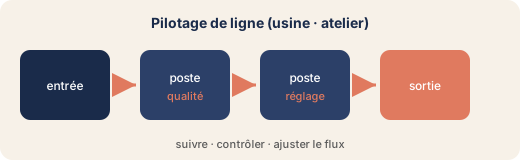
Diagram
Homework
Homework linked to the three learning journeys and trade documents · mid-journey and end-of-journey tasks.
Homework · Learning Journey 1 (instructions / safety)
Type · Short writing + prepared speaking
Duration · 45 min + 2 min speaking
Brief · From the trade sheet (production sheet / stop instruction), write 8 · 12 lines restating the procedure for a beginner in factory line. Then prepare a 2-minute oral: order of actions + one ban. Audience · line-operation mentor or a classmate. BO LV / CECRL · reading for action + spoken production (A2 / toward B1+).
Trade support · production sheet / stop instruction
Success criteria · /20
| Criterion | Marks |
|---|
| Accurate understanding of the document | 4 |
| Clear organisation (order of actions) | 3 |
| Trade lexis in sentences | 3 |
| Speaking: volume, clarity, no critical miss | 5 |
| Language care | 5 |
| Total | /20 |
Homework · Learning Journey 2 (interact with client / mentor)
Type · Dialogue write-up + role-play prep
Duration · 55 min
Brief · Write a 10 · 12 line workplace dialogue (greet · clarify · explain · close) set in factory line. Then practise aloud. Include 2 repair stems (“Could you repeat…?”, “Do you mean…?”). BO LV · spoken interaction + writing.
Trade support · Situation linked to: start-up, monitoring, adjustment, safe stop
Success criteria · /20
| Criterion | Marks |
|---|
| Complete interaction moves | 5 |
| Clear clarifying questions | 4 |
| Register adapted to listener | 4 |
| Repair language present | 3 |
| Language care | 4 |
| Total | /20 |
Homework · Learning Journey 3 (present the trade / mobility)
Type · Oral outline + parallel short text
Duration · Prep 40 min · oral 2 · 3 min
Brief · Prepare a 2 · 3 minute presentation of your trade and one task in factory line, plus a mobility wish or improvement goal. Write a parallel 12 · 15 line text. BO LV / CECRL · spoken production + writing (A2 / B1+).
Trade support · Mobility outline + placement notebook
Success criteria · /20
| Criterion | Marks |
|---|
| Clear trade / task description | 5 |
| Sequencing markers | 3 |
| Mobility / improvement part present | 4 |
| Parallel writing quality | 4 |
| Language care | 4 |
| Total | /20 |
Assessments
Formative assessment (criteria grid) and CFA-style summative assessment (speaking + writing), aligned with BO LV / CECRL A2 · B1+.
Formative assessment · criteria grid (BO LV / CECRL)
Type · Formative criteria grid
Duration · 15 · 20 min observation during a class
Brief · During an activity in factory line (or simulation), the teacher completes a grid: reception · interaction · production · writing. Oral feedback + 3 improvement tips.
Grading · grid /10 (indicative)
Marking scheme · /10
| Criterion | Marks |
|---|
| Reception · finds key info in the document | 2 |
| Interaction · asks / clarifies | 2 |
| Production · explains a step clearly | 2 |
| Writing · dated readable trace | 2 |
| Attitude · asks rather than invents | 2 |
| Total | /10 |
Summative CFA-style assessment · speaking + writing
Type · Summative (5 min speaking + 40 min writing)
Duration · about 1 hour
Brief · Writing · from an extract of production sheet / stop instruction: 3 comprehension questions + 8 · 12 line message for line-operation mentor + 8 lines presenting one task. Speaking · 5 minutes: instruction handoff + one interaction repair. Aligned with BO LV / CECRL A2 · B1+.
Grading · mark /20 (summative)
Marking scheme · /20
| Criterion | Marks |
|---|
| Reading / comprehension | 4 |
| Workplace message | 4 |
| Task presentation writing | 4 |
| Speaking (handoff + interaction) | 5 |
| Language and attitude | 3 |
| Total | /20 |
Internship / work-placement report
CFA core · the work placement is central to apprenticeship. The report and short oral link trade gestures with vocational English (read, speak, write · CECRL A2 / B1+).
Work-placement report · factory (line operation) · outline
Brief · Write a placement report linking trade gestures (start-up, monitoring, adjustment, safe stop) with vocational English. Use your weekly log. Audience: English teacher + line-operation mentor.
Indicative length · 6 to 10 pages (CAP / Bac Pro) · readable font 12 · 1.5 spacing
Report structure
- Cover page (identity, company, dates, mentor)
- Company / workshop presentation
- Two or three significant tasks (read · do · write)
- One difficulty and how you asked for help in English (or tried to)
- Link to one classroom learning journey
- Review and next goals (mobility / skills)
- Annexes: safety sheet / work order / captioned photos (with permission)
Success criteria · /20
| Criterion | Marks |
|---|
| Complete outline | 4 |
| Accurate trade facts | 4 |
| Analysis (not only description) | 4 |
| Language and presentation | 4 |
| Clear English ↔ trade link | 4 |
| Total | /20 |
Weekly work-placement log
Each week in factory line, log one task, one term, one sentence. Examples below.
| Day | Task done | Lexis kept | Sentence to keep |
|---|
| Monday | … | line | Today I used “line” in a real situation. |
| Tuesday | … | pace | Sentence kept from line-operation mentor. |
| Wednesday | … | adjustment | I will restate this for a classmate tomorrow. |
| Thursday | … | … | … |
| Friday | … | … | … |
Short oral presentation of the placement
Duration · 5 to 8 minutes + questions
Plan (5 · 8 min)
- Present the company and my role (1 min)
- Describe one significant task (2 min)
- Explain a difficulty and how I asked for help (2 min)
- Open toward a mobility or skill goal (1 min)
- Answer questions (2 min)
Criteria · /20
| Criterion | Marks |
|---|
| Clarity and structure | 5 |
| Accurate trade lexis | 5 |
| Interaction / answers | 5 |
| Professional attitude | 5 |
| Total | /20 |
Classroom materials · exercises, talks, reports, corrected assessments
Ready for class · texts with questions and answer keys, exercises, short talk brief, annotated work-placement model, corrected assessment. Answer key blocks expand on click (also print-visible).
Text + questions + answer key
Trade text · Pilotage de ligne de production workplace document
Type · Authentic-style CFA sheet (reading for action · CECRL A2 · B1+)
LINE STATION · INSTRUCTION
1. Start-up checklist.
2. Watch indicators / alarms.
3. Adjustments to the sheet.
4. Fault: secure · inform · log.
5. Written shift handover.
FORBIDDEN: silencing an unread alarm · trading safety for pace.
CFA Production · pedagogical sheet
Comprehension questions ·
- Who is the document for in the factory line?
- List two compulsory steps and one forbidden action (or critical warning).
- Rephrase the core instruction in one clear sentence for a beginner.
- Which workplace risk does this sheet help prevent? Link to: start-up, monitoring, adjustment, safe stop.
- Write 3 · 4 lines to your line-operation mentor restating what you will do first.
Answer key · text
- Audience: apprentice / team in the factory line (justify with a wording clue).
- Two accurate steps + one ban/warning quoted or closely paraphrased.
- One full sentence, correct word order, trade verb present.
- Risk linked to real gestures (start-up, monitoring, adjustment, safe stop); no generic “safety” waffle.
- Short message: greeting · first action · check · close; register suitable for line-operation mentor.
Exercises
Exercise 1 · Lexis in context
Brief · Complete each sentence with the right term: line, pace, adjustment, alarm, stop. Setting · factory line.
- Before starting, I check the procedure and log the step (line).
- I restate the point for my line-operation mentor using “pace”.
- I explain the difference between “line” and “adjustment” to a classmate.
Exercise 2 · Grammar in context (imperatives / modals / sequencing)
Brief · Turn casual speech into clear workplace English for a notice in the factory line. Use imperatives, must / have to, and sequencing markers (first, then, finally).
- casual · “yeah check the line first” · workplace notice
- casual · “tell them about the pace” · polite message
- casual · “that thing we did yesterday” · precise relative clause
Exercise 3 · Reformulation (inform / clarify / present)
Brief · From one situation in the factory line (start-up, monitoring, adjustment, safe stop), write three short versions: a) inform (facts) · b) clarify with a repair question · c) present the task (6 · 8 lines).
- Starter situation involving “line”.
Answer key · exercises
Answer key · Exercise 1 (lexis)
- Sentence 1: correct use of “line” in the factory line.
- Sentence 2: “pace” addressed to the line-operation mentor.
- Sentence 3: clear contrast line ≠ adjustment with a trade criterion.
Answer key · Exercise 2 (grammar)
- Model · “Check the line before any intervention.”
- Model · “Please inform the client about the pace.”
- Replace “that thing” with a precise noun + relative clause.
Answer key · Exercise 3 (reformulation)
- a) Inform · dated facts, no drama.
- b) Clarify · repair stem (“Could you repeat…?”, “Do you mean…?”).
- c) Present · order of actions in the factory line + one check.
Short talk / presentation
Short talk / presentation · Pilotage de ligne de production
Brief · In 3 · 5 minutes, present one task in the factory line (start-up, monitoring, adjustment, safe stop): what you read, what you say, what you write. Include 3 terms: line, pace, adjustment. CECRL · spoken production A2 / toward B1+.
Duration · 3 · 5 min + 1 · 2 min questions
Expected outline
- Hook (real-life situation, 20 · 30 s)
- Reading the support (production sheet / stop instruction, 1 min)
- What you say to the team / client (1 min)
- What you write (log / message) (1 min)
- Close: one limit or one strength (30 s)
- Audience questions
Criteria · /20
| Criterion | Marks |
|---|
| Clarity and timing | 4 |
| Accurate trade lexis | 5 |
| Read · speak · write link | 4 |
| Interaction (answers) | 4 |
| Professional attitude | 3 |
| Total | /20 |
Model expectations / answer outline
Model expectations · Learner sets a scene in the factory line, names the line-operation mentor, refers to production sheet / stop instruction, uses line, pace, adjustment in sentences, shows reading, speaking and writing moves, and answers without inventing unsafe steps.
Work-placement report · annotated model
Annotated model · work-placement report (Pilotage de ligne de production)
Use the outline above. Below is about one page of métier-specific model text with teacher annotations. Learners adapt facts and wording · no copy-paste.
Work-placement report · annotated model (Pilotage de ligne de production)
1. Company and role
I am on placement at factory (line operation), in the factory line. My mentor is the line-operation mentor. My activities include line operation, pace, quality.
[Note A · identity + place + mentor: complete]
2. Significant task
During a task involving “line”, I first read production sheet / stop instruction, then carried out the gesture (start-up), and finally logged the result. Read · do · write helped me avoid a mistake.
[Note B · vocational English chain visible]
3. Difficulty and asking for help
I was unsure about “pace”. I asked the line-operation mentor: “Could you confirm before I continue?” Then I wrote the answer in my weekly log.
[Note C · repair language + written trace]
4. Review
I am more confident with line and adjustment. I still need to improve clear reformulation for the client / team. Next goal: one clear sentence per gesture.
[Note D · balanced review, clear next step]
Teaching annotations ·
- A · Full presentation (company, place, mentor)
- B · Explicit read · do · write chain
- C · Help request + log entry
- D · Review with progress and limit
Corrected assessment
Corrected assessment · Pilotage de ligne de production
Type · Writing + speaking (task + markscheme + model answers)
Duration · ≈ 1 hour
Task ·
Corrected assessment · Pilotage de ligne de production
Timing · writing 40 min · speaking 4 · 5 min
Support · extract from production sheet / stop instruction · setting: factory line.
WRITING
1. (4 marks) Find two facts and one action instruction in the support.
2. (6 marks) Write an 8 · 12 line message to your line-operation mentor: facts, checks, next step. Include line and pace.
3. (5 marks) In 8 · 10 lines, present one task in the factory line with clear sequencing.
SPEAKING
4. (5 marks) In 4 · 5 min: hand off an instruction linked to start-up, monitoring, adjustment, safe stop and answer one clarifying question.
Markscheme · /20
| Criterion | Marks |
|---|
| Q1 · Facts / instruction | 4 |
| Q2 · Workplace message | 6 |
| Q3 · Task presentation writing | 5 |
| Speaking · handoff + answer | 5 |
| Total | /20 |
Detailed answer key / model answers
Model answers / markscheme notes ·
1. Two locatable facts from production sheet / stop instruction + one action verb/step. No opinions.
2. Message: date · audience (line-operation mentor) · facts about line · check (pace) · next step. Professional register.
3. Task presentation: first / then / finally + one safety or quality check in the factory line.
4. Speaking: clear order; accurate lexis; answer without inventing unsafe steps.
Marks · Q1 /4 · Q2 /6 · Q3 /5 · Speaking /5 · Total /20.
CECRL / BO LV · reading · writing · spoken production / interaction (A2 · B1+).